On this page
- What are location permits for filming in Bali?
- Does the national permit cover every location?
- Who decides at temples and villages?
- What about beaches and private villas?
- Which sites publish their own rules?
- Are Ubud or Mount Batur any different?
- Which popular locations need extra coordination?
- How should you track consent across a shot list?
- Do you need a crowd or road permit?
- Should a crew hire local security?
- What else do crews ask about Bali locations?
- Which published prices did we check?
- Which sources support this page?
- How do I reach the desk?
By Film Permit Bali Editorial Desk
Sourced figures: prices in the table carry their source and check month. Fees change, and they are official or third-party figures, not our offers.
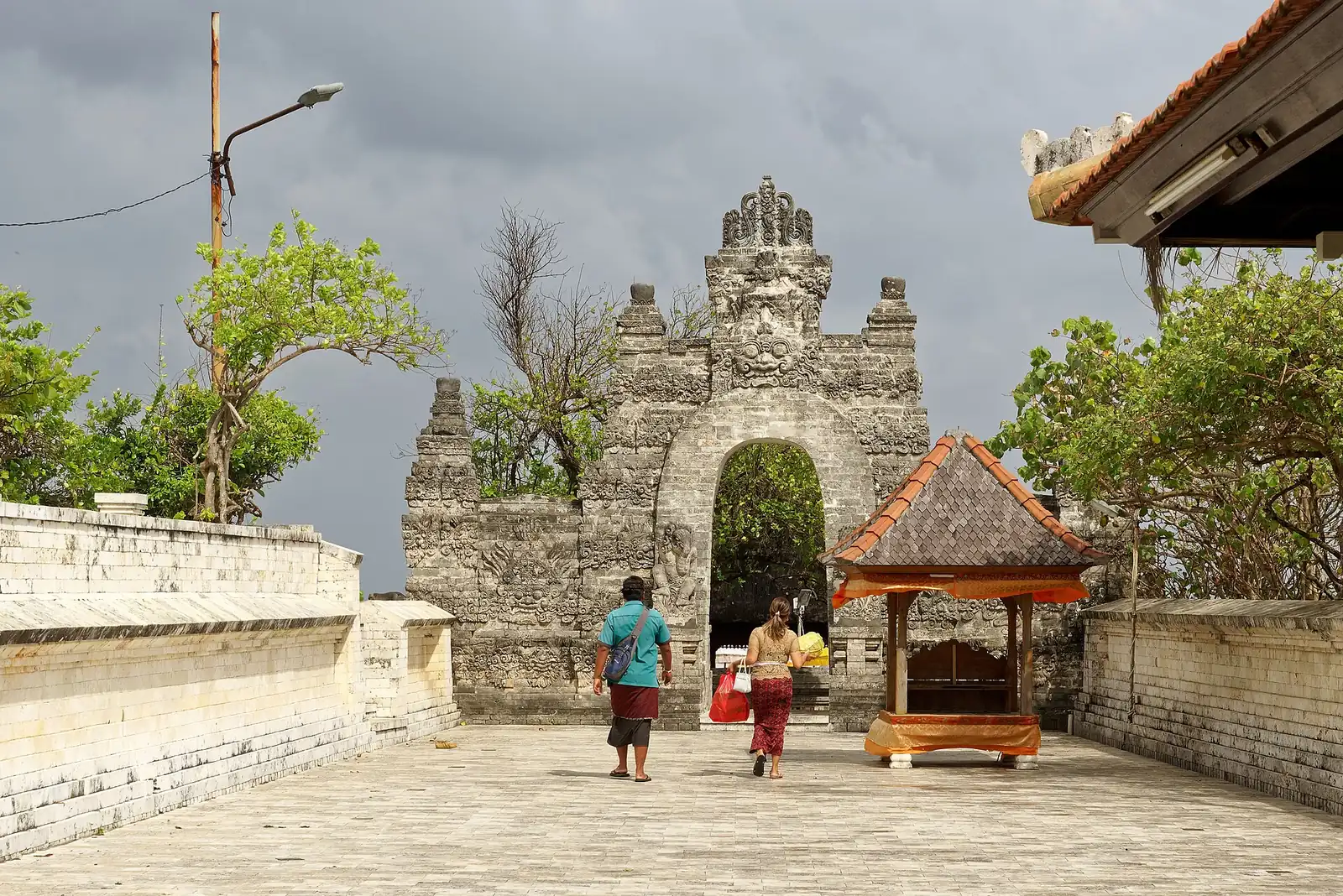
Location permits for filming in Bali are the consents you collect site by site: from temple authorities, customary villages, park offices, landscape managers and private owners. The Embassy in Canberra lists them as the final step, while Hoodlum says temple permissions should start alongside the ministry permit. No single office signs for all of them, and no source publishes a uniform rate.
What are location permits for filming in Bali?
The phrase covers two different things, and mixing them up causes bad schedules. Indonesian regulations call the national film permit a "Location Use Permit", which reads like a site permit but comes from the culture ministry. The site-level consents are a separate step. When someone says "your location permit is done", ask which one they mean.
Antara reported in November 2024 that foreign crews had used nature reserves or national parks, cities, customary villages, markets and heritage sites. Each type has a different gatekeeper.
| Location type | Who decides | What the source is |
|---|---|---|
| Temples | Each temple authority | Hoodlum, an operator; Tanah Lot's own page for that site |
| Customary villages and banjar | Local bodies; some charge fees | TDR Films, an operator, on fees |
| National parks and conservation areas | The office managing the area, through a SIMAKSI entry permit | Embassy in Washington; West Bali park page |
| Rice terraces with working subaks | Start with the site manager, and ask about the subak, whose members follow awig-awig codes | UNESCO on the codes; the Jatiluwih page on the rest |
| Beaches | Varies; location fees and extra permission are reported | TDR Films and Filming in Indonesia, operators; Uluwatu's body names Labuan Sait Beach |
| Private villas and resorts | The owner, in a written agreement | Hoodlum, an operator; operator guidance only |
Does the national permit cover every location?
It names your locations but does not settle them with local managers. Under Article 10 of Regulation 48/2018, the film unit sends a copy of the permit to the agencies and local governments responsible for those locations. A copy reaching a regency office tells that office you are coming. It does not tell a temple committee to admit you.
Canberra's procedure ends with location permits, and the embassy says the filmmaker and local fixer handle them for each intended location. Choosing that film fixer in Bali comes first. A ministry film permit official quoted by Antara gave a matching sequence: location permit, visa, then local location, crowd or other special permits before shooting.
If your film centres on one community or agency, consent comes earlier at some missions. Washington requires an acknowledgment letter from the agency or community that is the main subject of the production, so that conversation belongs in the application stage at that mission. The earlier steps are on how to get a film permit in Bali, the folder on film permit requirements in Indonesia and crew entry under filming visa for Indonesia.
Who decides at temples and villages?
Hoodlum, a production company, says temple filming requires separate permission from each temple authority and that the general ministry permit does not cover it. Two official sites support the idea that managers act for themselves. Tanah Lot's ticket page says visitors who want photo sessions, drone flights, shooting or other commercial purposes are expected to report to the management. Uluwatu's site describes its operator as the official managing body of Uluwatu Temple and Labuan Sait Beach. The detail by temple is on filming at temples in Bali.
Villages are harder, because published guidance is thin. TDR Films says temples, beaches and some villages charge their own location fees, separate from the national paperwork. SNXP Studio recounts one case in which a nearby temple anniversary and banjar concerns affected a Canggu shoot. That is a single operator's story, though it shows why you should ask about the ceremonial calendar along with the fee. Your local partner should name the customary village and banjar for each address before you lock a date.
What about beaches and private villas?
Treat each of Bali's beaches as its own question: who manages access at this stretch, and do they charge? TDR Films lists beaches among the places that charge their own location fees. At Labuan Sait, the Uluwatu body names itself as manager. If you can see no manager, ask your partner which village or office to approach before you arrive with a crew.
For villas and resorts, the only guidance comes from operators, and we know of no law requiring a specific permit. Hoodlum says they need individual written location agreements. A holiday booking confirmation does not give you that, so ask the owner or manager to sign a document naming the dates, crew size, equipment and what you intend to do with the footage.
Which sites publish their own rules?
Few do, and the published rules differ in depth.
- Tanah Lot publishes no fee for commercial shoots.
- Uluwatu identifies its managing body and shows no filming rules on its main page.
- Jatiluwih publishes admission on its own site, while filming charges come from a tour operator's listing. UNESCO adds that most subaks hold written codes called awig-awig, which set members' rights and duties.
- West Bali National Park has the fullest text. Its page requires film or video makers to explain their plans and obtain a SIMAKSI before starting. A SIMAKSI lasts up to three months and can be extended on request. The page says extension requests go in at most fifteen working days before expiry, a wording worth confirming with the park.
Conservation rules reach beyond one park. Washington says filming inside a conservation area requires a SIMAKSI issued by the forestry ministry's conservation directorate through the office managing the area. A Sulawesi conservation office, summarising Regulation 36 of 2024 in February 2025, says SIMAKSI covers commercial and non-commercial film, documentary film and journalism among other activities.
The price table on this page shows three reference points: Tanah Lot admission, a tour operator's Jatiluwih filming line and the national conservation line published by that Sulawesi office. None is a quote, and the Sulawesi figure is not a West Bali rate. For the wider picture, read what a film permit in Bali costs.
Are Ubud or Mount Batur any different?
The same questions apply there. We know of no official filming rule for Ubud as a town or for Mount Batur, so neither name leads you to one office. Hoodlum's claim about one Ubud site is in the next section. Break the place into addresses instead. A street, a market, a temple and a private garden in Ubud can each have a different gatekeeper, and on Batur you should first ask your partner who controls access to the part you want.
Which popular locations need extra coordination?
Hoodlum names several in its Bali guide. It says the Sacred Monkey Forest Sanctuary in Ubud requires advance booking and specific permits for professional filming. It describes the Jatiluwih and Tegallalang rice terraces as involving community and tourism authority coordination. It also puts Uluwatu, Tanah Lot, Besakih and Tirta Empul among temples needing advance permission, with timelines of their own that should start alongside the ministry permit. Filming in Indonesia, another production company, says beaches and places of worship need additional permission from the management. These are company accounts rather than published site rules, so confirm them with each manager. Canberra lists location permits as the final step, while Hoodlum says temple permissions should start alongside the ministry permit. Those two accounts differ, so ask your mission and partner when to open each conversation.
How should you track consent across a shot list?
- Give every address its own row: location type, manager, contact and the person who replied.
- Record what that manager wants: a fee, a letter, a copy of your national permit or a meeting.
- Mark consent as written or verbal, and treat verbal as unfinished.
- Check that each address also appears on the national file, because the permit format rules out locations beyond those listed.
- Flag any flight, because commercial drone filming in Bali is a separate track from the ground consent.
Do you need a crowd or road permit?
You may. A ministry official listed crowd permits among the local permits to arrange before shooting. Ask your local partner what your scene needs, and do not schedule a closure or a large crowd until the responsible office has confirmed it in writing.
Should a crew hire local security?
Two companies advise it. Hoodlum describes Bali production risks as mainly logistical and advises local security personnel for gear protection, crowd control and location access. Atlas Film Fixers advises hiring local security specialists for equipment safety, location management and crowd control. Both firms sell production support, so ask for a named person and a cost, and ask each location manager how outside security is handled.
What else do crews ask about Bali locations?
Who gives permission to film in Bali?
No single body. The culture ministry handles the national permit. The Embassy in Canberra leaves each location to the filmmaker and fixer, and operators describe consent coming from temple authorities, villages and owners.
Can I film at Bali beaches?
No single answer covers them. TDR Films lists beaches among places that charge their own location fees. Filming in Indonesia, a production company, says beaches need additional permission from the management. Find out who manages access at your stretch and get the answer before the shoot day.
Can I film in Bali markets?
Antara's report lists markets among places foreign crews have used. That report names no body that grants consent, so ask your local partner to identify the market's manager.
Can I film at Bali waterfalls?
Find out who controls access first. A conservation area means a SIMAKSI, while other sites fall to a village or a private owner.
Do villas need a location agreement?
Hoodlum, a production company, says private villas and resorts need individual written location agreements. That is operator guidance, not a legal text. A signed agreement also gives you a written record of what was agreed.
Which published prices did we check?
Official fees and public third-party listings, each with its source and the month we checked it. These are not our prices or offers. Fees change and sources disagree, so check the source before you rely on a figure.
| Item | Published price | Source | Checked |
|---|---|---|---|
| Tanah Lot admission, foreign adult (official site; commercial shoots are told to report to the management) | IDR 75,000 | tanahlot.id | Nov 2026 |
| Jatiluwih filming with an international narrator (tour operator listing, not the manager) | IDR 7,500,000 | water-sports-bali.com | Nov 2026 |
| Commercial filming in Indonesian conservation areas, foreign nationals, per package per location (national table as published by a Sulawesi office, not a West Bali rate) | IDR 20,000,000 | bbksdasulsel.ksdae.kehutanan.go.id | Nov 2026 |
Which sources support this page?
- Regulation 48/2018, Article 10
- Embassy in Canberra, filming procedure
- Embassy in Washington, journalistic and film production
- Antara Bali, November 2024
- Tanah Lot official ticket page
- Uluwatu Temple official site
- Hoodlum, film production services in Bali
- TDR Films, international film permit in Bali
- SNXP Studio, film permits in Indonesia
- UNESCO, Cultural Landscape of Bali Province
- West Bali National Park, general information
- BBKSDA Sulawesi Selatan on Regulation 36 of 2024
- Atlas Film Fixers, Bali filming guide
- Filming in Indonesia, production FAQ
How do I reach the desk?
Send a location list with addresses, dates, crew size and any drone or crowd plans. The desk replies with general information; site managers keep the final say, and a reply from us does not secure any location. Because a request can lead to a paid booking, we have a commercial interest. You will see any fee, the price and the contracting company in writing before you agree, and that written offer is the only binding document.
- WhatsApp: +62 811-3941-4563
- Email: bd@juaraholding.com
Send the desk your dates, crew size, locations, and drone plans. The desk replies in writing.
Ask the desk on WhatsApp bd@juaraholding.com